 CasinoCheck Tanzania
Is betPawa a Scam or Legit in Tanzania?
A suspicious-address decision
The first question is not whether a familiar name appears on a search result. It is whether the address you are using is the exact host covered by the available Tanzanian evidence. The domain examined here is betpawa.co.tz. The current signal is amber, not green and not red.
That decision has a narrow meaning. A current Gaming Board of Tanzania online-operator table identifies Choplife Gaming Limited / BetPawa. However, the supplied record does not establish that a certificate is bound to betpawa.co.tz, and no licence expiry date is available in the packet. The evidence therefore supports a plausible legal-identity match, but not a complete domain-to-certificate conclusion.
The practical answer to “is betPawa scam or legit in Tanzania?” is consequently conditional: the named operator appears in a current primary regulator record, while the exact hostname and certificate binding still need checking. Do not treat the amber signal as proof of fraud, and do not treat the trade-name listing as a guarantee that every lookalike address is genuine.

| Question | Evidence-led answer | What remains open |
|---|---|---|
| Does a regulator table name the operator? | Yes, the supplied current table identifies Choplife Gaming Limited / BetPawa. | The certificate number, expiry and domain binding are not supplied. |
| Is betpawa.co.tz the verified host? | It is the observed public-facing domain in the operator record. | The packet does not prove that the licence covers this exact host. |
| Is there an official adverse finding? | None is supplied. | Absence from this packet is not a clean compliance certificate. |
| Is a withdrawal complaint proven? | No. One dated user allegation is contextual and unverified. | The underlying transaction, response and resolution are unknown. |
Visit a checked casino option · 18+
Legal identity and the exact-host problem
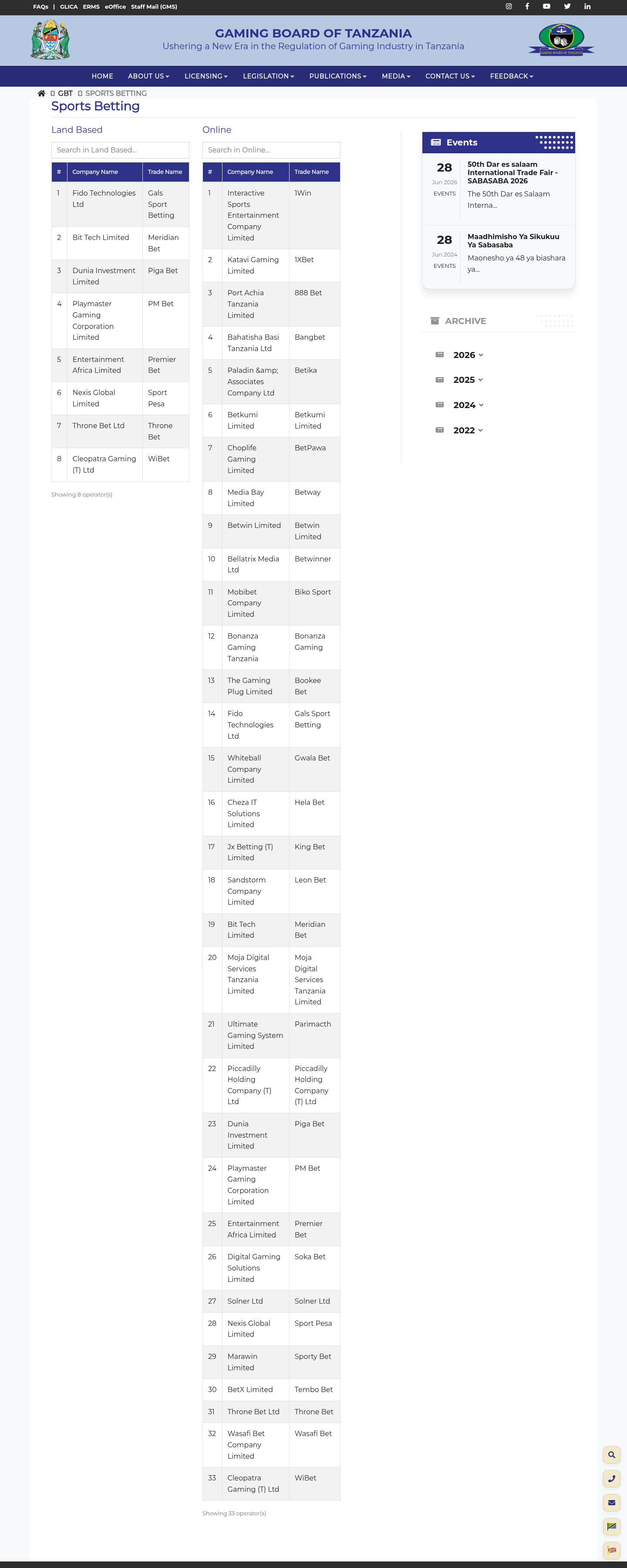
The strongest supplied evidence is the Gaming Board of Tanzania listing. Its claim is limited to a current public table of land-based and online sports-betting company or trade names. In that table, the relevant pairing is Choplife Gaming Limited / BetPawa. This gives the review a primary-record basis for discussing the operator identity.
It does not automatically answer three separate questions. First, whether the legal entity is currently authorised for every product displayed. Second, whether the trade name is connected to the precise hostname a customer opened. Third, whether the certificate remains current, because no expiry date appears in the supplied packet. These are not wording differences: each can affect where deposits, identity documents and complaints should be directed.
The operator’s own presentation identifies the public-facing domain as betpawa.co.tz. That is an operator statement, not independent proof of regulatory scope. The careful match is therefore: observed host, operator self-presentation, and regulator-listed legal or trade-name pairing. The final certificate-and-domain link is still open.
| Identity layer | Supplied record | Confidence boundary |
|---|---|---|
| Legal operator | Choplife Gaming Limited | Supported by the regulator table’s pairing; no separate incorporation extract supplied. |
| Trade name | BetPawa | Appears with the operator in the primary table. |
| Exact host | betpawa.co.tz | Observed in the operator material; certificate binding is unresolved. |
| Licence status | Listed by the Gaming Board | Certificate number and expiry are not supplied. |
For a legal-or-not decision, use the legal entity and exact host together. A brand name alone is too broad, while a domain alone can be copied. The amber result reflects that distinction rather than a conclusion about the operator’s honesty.
How to check a clone before signing in
Hostname forensics is the most useful first control because copied branding can make an unrelated site look familiar. Start with the spelling of betpawa.co.tz, including the country-code ending. Treat extra words, substituted letters, unusual punctuation, shortened links and different country domains as unverified until independently matched.
Next, inspect the address before entering a phone number, password, payment details or identity document. A padlock only indicates an encrypted connection; it does not prove licensing or ownership. Compare the host shown in the browser with the host stated in the operator’s own material and with the domain information available from the regulator or an authorised industry record. Do not rely on a screenshot alone.
A redirect is another point to record. Note the address before and after the redirect, the date, and whether the final host remains the same. A promotion, social post or message that sends you to a different address should not be treated as a harmless shortcut. If the name, host and legal operator do not line up, stop before depositing.
The Tanzania Sports Betting Association member page can provide an additional public-facing-domain comparison for participating members, but association membership is not a substitute for a regulator’s licence record. Use it as a cross-check, not as the final legal test.
| Clone check | Safer observation | Stop signal |
|---|---|---|
| Spelling | Exact betpawa.co.tz host | Added, missing or substituted characters |
| Redirect | Final address remains the expected host | Unexplained third-party or different-country host |
| Identity | Choplife Gaming Limited / BetPawa pairing is consistent | Different company, trade name or contact identity |
| Source comparison | Regulator record and public-facing records agree | Only an advert, message or screenshot supports the claim |
| Data request | KYC is requested inside the recognised service flow | Identity documents requested through an unrelated contact |
What the regulator evidence proves—and does not
The supplied regulator page is the primary anchor because it is a current public table maintained by the Gaming Board of Tanzania, checked on 20 August 2026. It supports the claim that the named operator and trade name appear together. It does not supply a certificate image, certificate number, expiry date or explicit domain-binding field in the evidence packet.
That distinction prevents two opposite errors. Calling the service an obvious scam would overstate the supplied evidence because no official adverse record is provided and the operator pairing appears in a primary source. Calling it fully verified would also overstate the evidence because the exact host and certificate details remain open.
A regulatory listing should be read as a dated snapshot. Check the current table again when making a live account or payment decision, and preserve the exact entry, date and hostname you relied on. Changes in a public register can matter even where the brand presentation has not changed.
Payments: trace the transaction, not the promise
The packet contains no verified payment-method list, deposit test, fee schedule, processing time or successful withdrawal test. Those omissions matter. A payment logo or promotional statement would show an offered route, not prove that a particular customer’s deposit or withdrawal will complete under particular conditions.
Before depositing, record the payment route presented inside the exact host, the account name or reference used, any displayed minimum or maximum, and the terms shown at the point of confirmation. Keep the transaction reference and timestamp. Do not send funds to a personal number or account merely because someone uses the same brand name in a message.
For a withdrawal, check whether the destination is controlled by the same account holder and whether the service requests verification before release. Record the requested documents and the status message without publishing sensitive numbers. A delay can have several explanations, including verification, payment reconciliation or a disputed transaction; the supplied packet does not establish which explanation applies here.
| Payment stage | Record for your own file | Evidence available here |
|---|---|---|
| Deposit | Host, channel, amount, time and reference | No transaction test supplied |
| Balance credit | Confirmation and credited amount | No independently verified result supplied |
| Withdrawal request | Method, amount, status and conditions | No withdrawal test supplied |
| Completion | Settlement reference and received amount | No completion record supplied |
| Dispute | Correspondence and regulator route | Board portal’s complaint function is documented; case outcome is unknown |
For broader payment-risk checks, use the site’s internal guide at payment checks. It cannot turn an untested method into a verified one, but it can help structure the record you retain.
Withdrawals and KYC: what is unknown
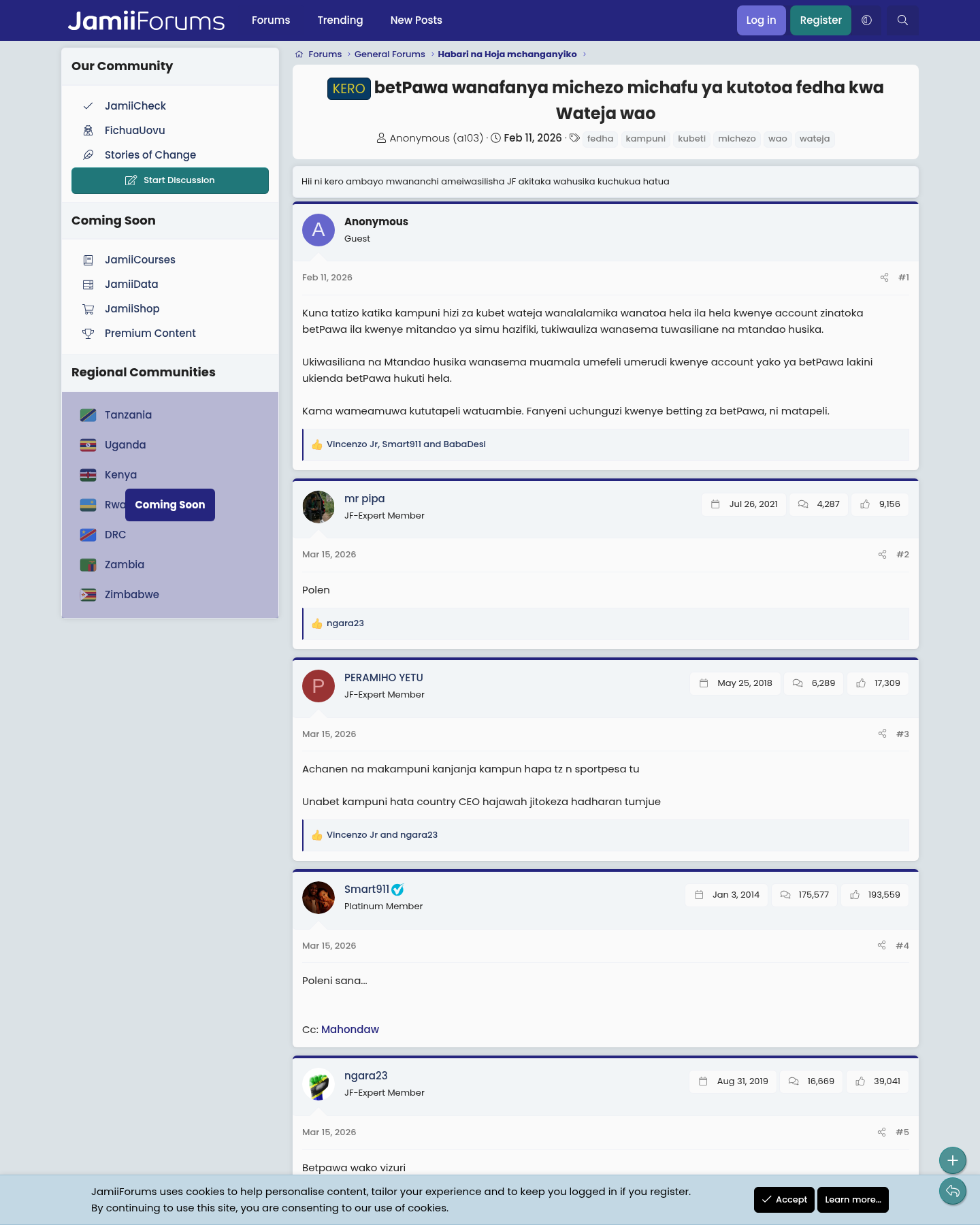
There is no verified withdrawal outcome in the packet. One dated forum post alleges a withdrawal problem involving the service, but it is explicitly contextual and unverified. It does not establish that the allegation is true, that the account was operated on the exact host, that the transaction was lawful and complete, or that the operator failed to resolve it.
KYC should be treated as a normal risk-control topic rather than proof of legitimacy. The packet does not state which documents are requested, when checks occur, how long they take, or how rejected documents are handled. Do not invent those details from general industry practice. Read the terms shown in the account flow and save the relevant version or screenshots for your own records, while removing account numbers and identity information before sharing evidence.
If a withdrawal is held, ask for a clear written reason and the specific outstanding requirement. Keep communications factual: date, amount, method, reference and response. Avoid repeated deposits made solely to unlock a withdrawal unless you understand the condition and have independently verified the host. No supplied evidence supports a claim that withdrawals are routinely paid or routinely refused.
Complaint route and escalation
The Gaming Board portal record says that its functions include complaints, registry inspection and voluntary self-exclusion. That is useful evidence about the existence of a regulatory-facing route, not proof that any particular complaint will succeed. The portal’s role should be checked directly before submission, using the current process and required documents.
Start with a written complaint to the service through the contact channel shown within the exact host. State the account identifier in a limited form, transaction references, dates, amount, issue and remedy requested. Do not send more identity information than the recipient’s verified process requires. Give the operator a coherent chronology rather than several conflicting messages.
If the response is absent or inadequate, preserve the complete record and consult the Board’s complaint process. The internal route complaints and warnings explains how to organise the issue, while licence and law provides related regulatory reading. These are internal resources, not substitutes for the competent authority.
For self-exclusion or urgent gambling harm, use responsible gambling and urgent help. A complaint about money is separate from a request for support, so keep those communications distinct.
| Escalation step | Include | Do not do |
|---|---|---|
| Service complaint | Dates, references, amount, host and requested remedy | Publish passwords, ID numbers or full payment credentials |
| Evidence preservation | Statements, messages, status screens and chronology | Edit the original record so the sequence becomes unclear |
| Board process | Required form or documents and the operator’s response | Present an allegation as an established finding |
| Support or exclusion | Clear request for limits, exclusion or help | Continue depositing while seeking emergency support |
The dated user allegation in context
The supplied forum capture records a user allegation concerning a withdrawal and was checked on 20 August 2026. It is a user-context source, not a regulator finding, operator admission or independently verified transaction record. The allegation may be relevant as a reason to ask careful questions, but it cannot establish a pattern or prove misconduct.
The correct reading is narrower: a public user report exists; its account identity, exact host, transaction documents, operator response and resolution are not established in the packet. Corroboration would require dated records from competent or independent sources that can connect the facts to the same operator and host.
Evidence chronology and review method
The evidence packet was checked on 20 August 2026. The regulator table provides the primary identity signal. The operator source provides the observed public-facing domain and self-presentation. The Board portal provides evidence that complaint, registry-inspection and voluntary-self-exclusion functions are described. The association member page provides a possible public-domain comparison for listed members. The forum capture provides one unverified user allegation.
The method is deliberately layered. First, identify the exact host. Second, compare the host with the legal operator and trade name in the primary record. Third, separate regulator statements from operator statements and user reports. Fourth, mark missing certificate, expiry, domain binding, payment and withdrawal information as unknown rather than filling the gaps with assumptions. Fifth, give a signal proportionate to the strongest supported conclusion.
This produces amber with an open-evidence basis. A green signal would require current primary evidence supporting the precise domain and entity. A red signal would require an official adverse record or corroborated documented evidence. Neither threshold is met by the supplied packet.
| Evidence item | Role | Date checked | Decision use |
|---|---|---|---|
| Gaming Board online table | Primary | 2026-08-20 | Supports operator/trade-name pairing |
| Operator domain presentation | Operator | 2026-08-20 | Identifies observed host; does not prove licence scope |
| Gaming Board portal description | Primary | 2026-08-20 | Supports complaint, registry and self-exclusion route information |
| Association member page | Primary association record | 2026-08-20 | Cross-check only for participating trade names and domains |
| Forum withdrawal allegation | User context | 2026-08-20 | Risk context only; no finding or corroboration |
Practical limits before making an account decision
The open points should shape your decision. The packet does not provide a licence expiry date, certificate number, certificate image, explicit domain binding, verified payment test, completed withdrawal test, KYC timetable, fee schedule or complaint outcome. These are material limitations, not minor editorial omissions.
If you proceed to inspect the service, use the exact host, confirm the legal details shown at sign-up and avoid depositing until the regulator record and certificate information are consistent. Use a payment route in your own name, set a firm budget and retain transaction evidence. Never assume that a successful login proves that the host is authorised.
For a structured comparison of how signals are assigned, see methodology. For a safer-account framework, see responsible gambling. The contextual action link Check options is the only commercial route in this review; it is not a promise of approval, winnings, fast withdrawals or legal coverage.
Correction path and final assessment
Corrections should identify the precise statement, the affected host, the date and the stronger evidence that supports a change. A certificate showing the exact domain binding, a current expiry date, or a competent authority’s updated record could narrow the open points. A regulator adverse notice or corroborated transaction documentation could change the signal in the other direction.
Send a correction request through contact with the source record and a clear explanation of the disputed claim. Do not send passwords, full identity documents or payment credentials. The editorial team should preserve the earlier evidence chronology, distinguish a correction from a new allegation and update only claims supported by the new material.
The final assessment remains amber: Choplife Gaming Limited / BetPawa appears in the supplied current Gaming Board table, and betpawa.co.tz is the observed public-facing domain, but the certificate-to-domain binding and several customer-protection facts remain open. That is enough to justify careful verification, not enough to label the service a scam, and not enough to provide an unconditional legal endorsement.
gamingboard.go.tz · glicatest.gamingboard.go.tz · tsba.co.tz
FAQ
Is betPawa a scam or legit in Tanzania?
The supplied current regulator table identifies Choplife Gaming Limited / BetPawa, but the packet does not prove the certificate-to-operator.co.tz binding. The signal is amber: plausible operator evidence exists, while important verification remains open.
Is operator.co.tz legal in Tanzania?
The domain is the observed public-facing host, and the named operator and trade name appear in the Gaming Board table. The supplied evidence does not include a certificate number, expiry date or explicit domain-binding record, so a complete legal conclusion cannot be made from this packet alone.
Does the evidence prove that withdrawals are safe?
No. No verified withdrawal test, payment record or settlement outcome is supplied. A dated forum allegation exists, but it is user context and remains unverified.
What should I check before depositing?
Check the exact spelling of operator.co.tz, compare the host with the regulator record and operator identity, inspect redirects, confirm the payment account is yours and retain the transaction reference. Stop if a clone domain or unrelated payment recipient appears.
Where can I complain about a withdrawal?
First make a written complaint through the service’s verified channel, keeping the dates, amount, references and response. The supplied Gaming Board portal describes complaint, registry-inspection and voluntary-self-exclusion functions; consult its current process before escalating.
Why is the signal amber rather than green or red?
Green requires current primary evidence supporting the precise domain and entity, while red requires an official adverse record or corroborated documented evidence. The packet supports neither threshold: it contains a regulator listing, open domain-binding questions and one unverified user allegation.